
Wound Management in Prolonged Casualty Care
8th April 2026
Overview
Join Dr John Quinn, Vlad Chumackino, Dr Tom Stevenson and Aebhric O’Kelly who will examine wound management in prolonged casualty care, focusing on clinical decision-making when evacuation is delayed and resources are constrained. It will explore contemporary evidence and relevant research and guidelines, bring current lessons learned from the Ukraine conflict addressing infection prevention, dressing selection, debridement principles, and ongoing nursing care. The session is designed for clinicians managing wounds beyond the traditional “golden hour,” where outcomes increasingly depend on sustained, adaptive care rather than immediate surgical intervention. The speakers are faculty with the College of Remote and Offshore Medicine Foundation.
Aims
The aim of this webinar is to enhance the understanding of wound management in prolonged casualty care by providing an evidence-based, context-appropriate framework for assessing, treating, and monitoring wounds when evacuation is delayed. The session aims to support safe, effective decision-making in humanitarian and resource-limited environments, with emphasis on infection prevention, dressing strategies, debridement principles, and the ongoing nursing care required to minimise morbidity and prevent deterioration.
Learning Objectives
By the end of this webinar, attendees should be able to:
- Describe the pathophysiological challenges of wound healing in prolonged casualty care and austere environments.
- Apply evidence-based principles to wound assessment, dressing selection, and infection prevention when resources are limited.
- Explain the role of debridement, delayed closure, and ongoing nursing care in reducing complications during extended care timelines.
- Evaluate wound management strategies using case-based scenarios where evacuation and definitive surgical care are delayed.
Panellists
Our panellists include:

Aebhric O’Kelly (chair)
FFRRHHEd Dean Emeritus, CoROM.
Aebhric is a former Green Beret, a Tropical Nurse and a board-certified Critical Care Paramedic. He is the Founder and Dean Emeritus for the College of Remote and Offshore Medicine Foundation and a member of the Faculty Advisory Board for the Royal College of Surgeons, Edinburgh.
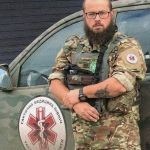
Vlad Chumachenko
Tactical Medicine North, Ukraine, Instructor, CoROM.
Vlad provides medical training for those who are working on the front lines and in casualty collection points. He teaches the Damage Control Procedures and Damage Control Resus Ukraine courses for the College of Remote and Offshore Medicine Foundation.
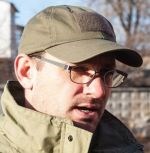
John Quinn MD PhD
Senior Lecturer, CoROM.
Dr Quinn is a healthcare professional with an MPH, a PhD in Hygiene and Epidemiology, and dual licensure as a paramedic and emergency medical doctor. He has led remote medicine clinics in conflict zones, consulted for NATO institutions, and specialised in health and medical stability operations. In Ukraine, he provided TCCC, PFC, and FRC training, established a prehospital whole blood program, and supported healthcare systems during COVID-19. In 2022, he returned to Ukraine to provide emergency care, evacuations, and Role 1/2 DCR/DCS. Currently, he advises on prehospital care to align with NATO standards and conducts research on conflict and disaster medicine at Charles University’s Prague Center for Global Health.

Dr Tom Stevenson
Senior Lecturer MBBS PhD FRCS (Tr & Orth), Senior Lecturer, CoROM.
Dr Stevenson is a Trauma & Orthopaedic Surgeon in the Royal Navy. He graduated as a Doctor from St. George’s Hospital Medical School in 2007, and has served 18 years in the Royal Navy, with deployed experience both on land and at sea.
During his front line tour of Afghanistan in 2011, he gained experience in pre-hospital care of combat trauma, including blast and ballistic injuries, which helped ignite his future research interests.
He subsequently was awarded a PhD in Wound Ballistics from Cranfield University in 2019 looking at quantifying tissue damage associated with military firearms and testing the effect of military clothing on gunshot wound patterns in both gelatine and cadaveric deer limb models.
CPD
1 Hour
To be eligible to receive CPD hours for webinar attendance you must connect for the full duration of the webinar AND complete the feedback survey.
Visit our FAQ for further information relating to webinar CPD.
Recording